Are Your Meat Sales Properly Taxed?

Authored by: Ryan Weber — Partner, CPA, CVA | Date Published: June 19, 2026
You know your cuts. You know your supply chain. But do you know which of your products are subject to sales tax, and which aren’t? For owners of meat processing facilities, this question is complicated. Unexpected tax bills, penalties, messy audits. Adding this layer of consequence makes the guessing game even more important.
The rules aren’t always intuitive. Marinating your cuts or selling them at a market rather than over the counter can result in different taxes and obligations. Here’s what you need to know.
What’s Different About Prepared Food?
Most states exempt “food for home consumption” from sales tax, and fresh, unprocessed meat generally falls into this bucket. But states draw a line between raw groceries and prepared food, and that line often trips up meat processors.
Once a product crosses into the prepared food category, it becomes taxable. The tricky part is that each state defines that line a little differently.
States differ in how they tax meat products beyond classifying them as prepared. Some states consider meat processing operations to be a manufacturer classification, which exempts you from state income tax.
Explore how your state might tax your operations differently.
Are Types of Meat Products Taxed Differently?
Sales tax audits in the food industry often focus on gray areas that catch meat processors who manage their taxes as any small business would. Unfortunately for these owners, auditors know that small food businesses frequently misclassify products, and they know where to look.
Getting this right will help you avoid penalties and run clean operations. Let’s look at the details of different types of processed meat.
- Fresh Cuts: Raw, unprocessed cuts are almost universally exempt from sales tax as unprepared grocery items
- Marinated or Seasoned Meats: Some states treat marinated meats as still being “grocery items” because they must be cooked. Others classify any meat that’s been mixed with or coated in an added ingredient as taxable. The answer depends entirely on your state’s specific definitions.
- Smoked or Cured Products: Taxation hinges on whether the product requires further cooking before consumption. A cured and smoked product that’s ready to eat is more likely to be classified as prepared food, and therefore taxable.
- Sausage and Ground Blends: Fresh, raw sausage typically follows the same rules as other raw meat and is exempt. But seasoned patties, fully cooked links, or specialty blends sold as ready-to-eat are treated differently.
- Jerky and Snack Items: Jerky is almost always taxable, being a shelf-stable, ready-to-eat product and not a grocery staple.
- Hot or Ready-to-Eat: If you’re selling smoked meat by the pound, pulled pork to go, or anything that’s hot and ready to eat, expect it to be fully taxable.
If you ever get audited, the auditor can’t just take your word for it. Documentation is the best way to make sure you qualify where it matters.
What Documentation Is Important That Owners Keep?
What does sales tax compliance mean for meat processors? It starts with the ability to collect the right amount, and then it’s about proving it.
Here’s what you should have on hand:
- Resale certificates: Any wholesale customers who claim a resale exemption.
- Product-level records: Distinguish taxable items from exempt ones.
- Vendor permits and registration: Any farmers’ markets or temporary selling locations.
- Sales records by category: Organize taxable vs. exempt and by reporting period.
Most CPAs can tell you that “food is generally exempt.” If you’re running a facility with fresh, marinated, smoked, and ready-to-eat categories, that level of distinction isn’t enough.
What Does a Sales Tax Audit Look Like?
Picture a usual weekday morning. You’re preparing the case, your smokehouse is running, and someone walks in the door. They’re not there for your products. They’re from the State Department of Revenue, and they want to look at the last three years of sales records.
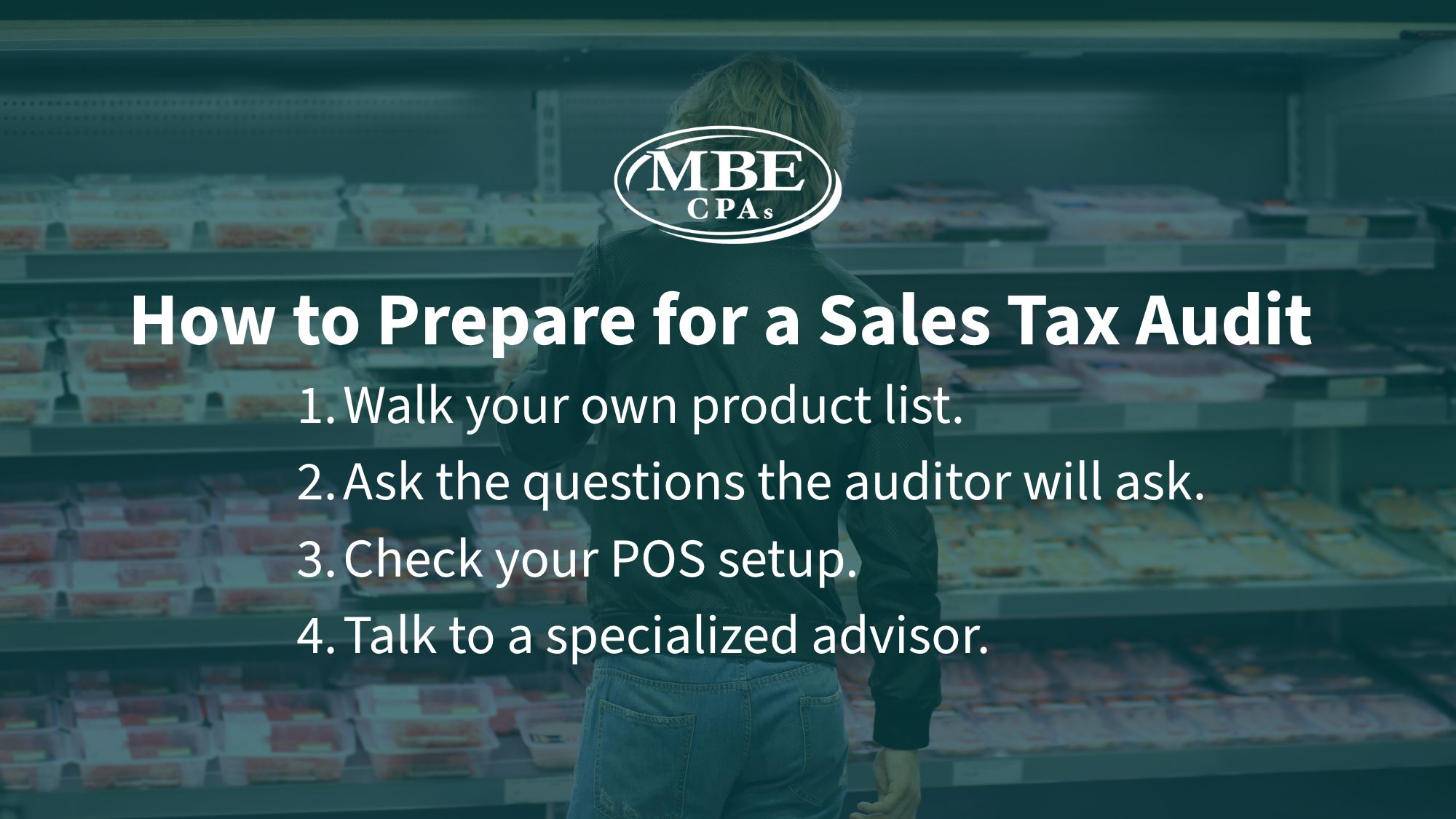
You don’t have to be caught off guard. Here’s how to get ahead of it:
- Walk your own product list: Pull up every item you sell and ask yourself honestly: Is this raw? Is it ready to eat? Does it have added ingredients? Keep sorting until you’re unsure, and that’s where to start focusing.
- Ask the questions the auditor will ask:
- Are my marinated products taxed the same as my plain cuts?
- When I sell meat by the pound, is it raw or ready to eat?
- Do I have a signed resale certificate for every wholesale account?
- If I sell at a farmers’ market, am I registered correctly in that jurisdiction?
- Has my state changed its definition of “prepared food” in the last few years?
- Check your POS setup: Your point-of-sale system should be correctly categorizing taxable vs. exempt sales and generating clean reports by category.
- Get a second set of eyes: The best time to find a problem is before an auditor does. Reviewing your product list, POS categories, and wholesale documentation will be easier now than fixing them later.
That’s the kind of conversation we have with clients.
At MBE CPAs, we work with businesses that need more than a generic answer. We understand how states tax different processed meats, and we help you build systems to track and document your processes correctly from the start.
If you’re not confident in the taxation of your meat sales, let’s talk before an auditor asks the same question.