
Could CFOs Help Your Restaurant?

Authored by: Doug Gross — Partner, CPA, CGMA | Date Published: December 17, 2025
As a restaurant owner, you know that every shift brings new challenges. Your POS system, Kitchen Display System, and inventory systems capture massive amounts of data daily. But the problem is, all that data doesn’t automatically translate into better decisions or higher profits. Many operations find themselves drowning in numbers while struggling to understand what those numbers actually mean for their bottom line.
You’re not alone if you feel this tension. According to Restaurant 365, 89% of operators report spending more on restaurant labor costs than the previous year, while 79% remain short-staffed. Food expenses continue climbing, and your Prime Cost can make or break profitability. You need more than a bookkeeper who records transactions. You need someone who can turn that mountain of data into a roadmap for growth.
This is where CFO-level financial thinking transforms restaurant operations from reactive scrambling to proactive success.
Featured Topics:
- Business Meals from Restaurants Are 50% Deductible in 2025 and 2026
- How Can Technology Data Be Transformed into Financial Insights?
- Is Prime Cost Management Possible Without CFO-Level Financial Analysis?
- Why Is Food Cost Percentage So Important in Restaurant Operations?
- How Does Labor Cost Management Influence Overall Profitability?
- How Do Outsourced CFO Services Deliver Restaurant-Focused Financial Guidance?
- What Are the Tangible Benefits of Investing in Financial Leadership?
- Moving Forward with Confidence
Business Meals from Restaurants Are 50% Deductible in 2025 and 2026
Bookkeepers provide essential historical records for invoicing and compliance, but they don’t offer the forward-looking financial guidance needed for major business decisions such as opening new locations, adjusting menu prices, or evaluating technology investments.
A CFO delivers this essential insight. Rather than just tracking expenses, a CFO analyzes patterns, forecasts future performance, and identifies opportunities before they become obvious. They answer critical questions such as: Which menu items actually make money after accounting for prep time? How do seasonal fluctuations affect cash reserves? When should you hire additional staff rather than invest in automation?
For restaurants specifically, a CFO helps with budgeting, forecasting, cash flow management, and profitability analysis. They bring specialized knowledge without requiring a full-time executive salary. This financial leadership is invaluable as restaurants integrate more technology into their operations, using data to provide high-level direction and set a new standard for success.
How Can Technology Data Be Transformed into Financial Insights?
Every order, inventory update, and labor hour adds to the data your restaurant produces. The real challenge is making sense of this information and using it to improve your business.
To turn data into actionable insights, you need someone who understands both technology and financial implications. The right software stack can reduce food waste by 15-25%, cut labor costs by 2-4%, and increase repeat visits by 20-35%. But these results are possible only when technology is paired with financial leadership.
Consider how integrated systems work together:
- Your POS captures sales patterns and identifies which items sell best during different dayparts.
- Your KDS software tracks preparation times and reveals kitchen bottlenecks that slow service.
- Your inventory system shows exactly which ingredients are being used (or wasted) and when reorder points should trigger.
- Your scheduling software matches labor hours to actual customer traffic.
A skilled CFO bridges the gap between marketing, operations, and menu development by providing financial insights that inform decisions. They connect these data streams (from your POS, KDS, Inventory, and Scheduling software) to show how a five-minute improvement in ticket times increases table turns and revenue, or how better inventory forecasting reduces spoilage costs. This ability to integrate information provides a significant competitive advantage for modern restaurant groups.
Real-time visibility into order flow, quote accuracy, and off-premises demand feeds directly into predictive models that measure unit performance. This allows both corporate and location managers to make better decisions about staffing, purchasing, and operations.
Is Prime Cost Management Possible Without CFO-Level Financial Analysis?
Prime Cost, which combines food and labor expenses, accounts for the largest share of restaurant expenditures and is one of the most important metrics in restaurant management.
Hitting your target Prime Cost percentage requires ongoing vigilance, not just post-facto calculations. Many operators calculate Prime Cost monthly or quarterly, but by then, they’ve already missed weeks of opportunities to improve profitability. For most restaurants, the ideal Prime Cost ranges between 55% and 65% of total sales.
Here’s what CFO-level analysis brings to Prime Cost management:
- Weekly or daily monitoring that catches problems before they compound.
- Variance analysis that compares actual performance against projections.
- Scenario planning that tests different pricing strategies before implementation.
- Forecasting models that predict seasonal fluctuations and help build appropriate cash reserves.
A CFO helps improve cash flow management in light of seasonality, avoiding the panic of winter slowdowns by proactively setting aside revenue during high-traffic months.
Why Is Food Cost Percentage So Important in Restaurant Operations?
Food cost percentage is a key factor in menu pricing and profitability. Carefully managing this figure helps maximize margins and stay competitive.
A CFO’s approach to food cost management goes far beyond calculating percentages:
- Analyzing which menu items carry the highest margins after accounting for labor intensity.
- Identifying waste patterns through inventory variance reports.
- Building portion control standards that maintain consistency.
- Negotiating with suppliers using data about ordering patterns and volume.
Many restaurant owners raise prices reactively when costs spike. A CFO takes a different approach, using financial planning to guide pricing models while considering competitive positioning and customer perception of value.
How Does Labor Cost Management Influence Overall Profitability?
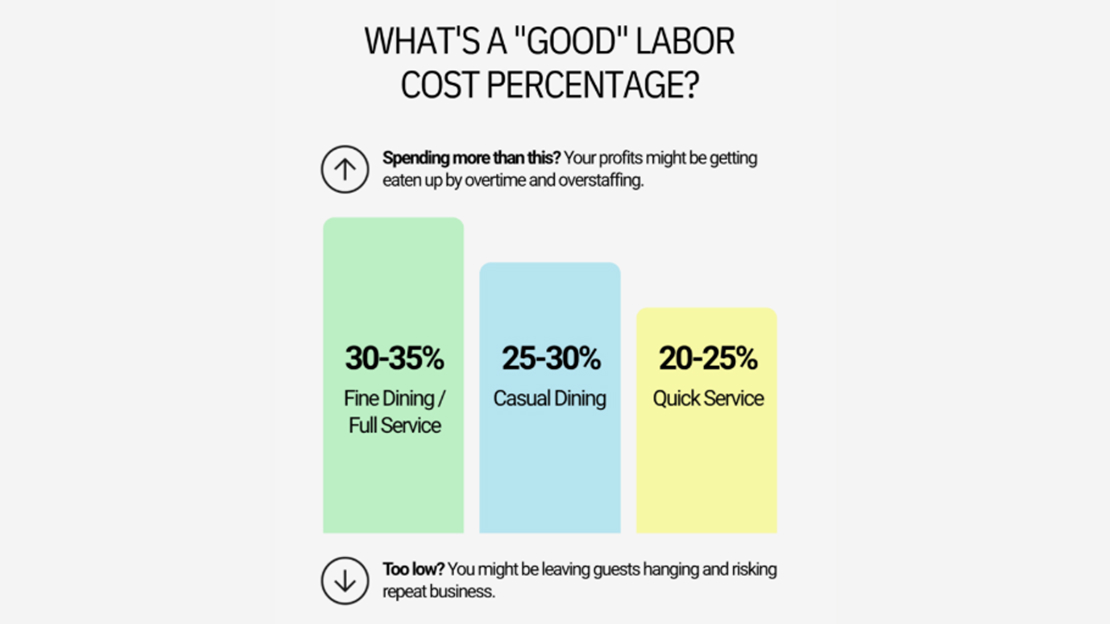
Labor represents roughly 30% of revenue for most restaurants, including management salaries. Nearly 30% of operators have cross-trained or repurposed staff to help keep labor costs low as they prepare for continued pressure on restaurant payroll percentages.
The challenge with labor goes beyond hourly wages. Total labor cost includes base wages, payroll taxes, workers’ compensation insurance, health insurance, paid time off, training costs, and employee meals. For example, when you pay an employee $10 per hour, it may actually cost closer to $12 or $13 per hour with added expenses. Addressing this detailed calculation is necessary.
CFO-level labor management focuses on matching team hours with actual business needs:
- Forecast scheduling based on historical sales volume data.
- Cross-training staff to perform multiple roles for more flexible shifts.
- Analyzing per-labor-hour productivity metrics.
- Planning for seasonal trends, weather patterns, and local events.
The goal is to match labor to actual business volume and properly manage staff resources without sacrificing service quality.
How Do Outsourced CFO Services Deliver Restaurant-Focused Financial Guidance?
Most QSR and FSR owners can’t justify the cost of a full-time CFO, but that doesn’t mean you should go without CFO-level financial guidance.
Outsourcing CFO services and Client Accounting Services (CAS) provides access to senior financial leadership on a part-time or contract basis. For restaurants, fractional CFOs offer a practical solution that provides high-level support without the prohibitive costs of a full-time executive.
These services typically include:
- Monthly financial reporting with industry-specific metrics
- Cash flow forecasting and management
- Prime Cost analysis and recommendations
- Technology integration guidance, especially for emerging restaurant technology
- Menu engineering and pricing strategy
- Expansion planning, including guidance on strategic franchising
- Tax planning and compliance oversight
The MBE CPAs’ approach combines deep accounting knowledge with a strong understanding of the restaurant industry. We recognize that your menu isn’t just a list of dishes, but a financial document that drives profitability. Our team works with you to build strong financial systems, interpret data, and find cost-saving opportunities.
What Are the Tangible Benefits of Investing in Financial Leadership?
Consider the alternative: operating without clear financial visibility. You’re making decisions based on gut feelings or outdated reports. You don’t know which locations or menu items truly drive profits. You can’t accurately forecast cash needs, which creates stress during slow periods.
The right financial partnership delivers measurable results. It helps you realize the potential of your current operations and improve your competitive standing.
- Better cash flow management that prevents working capital shortages.
- Improved Prime Cost percentages that directly increase profits.
- Data-driven menu decisions that increase margins without sacrificing quality.
- Technology integration that provides actionable insights rather than just data.
- Confident expansion planning based on solid financial analysis.
Your restaurant deserves the same level of financial sophistication as larger chains. With the right CFO services and Client Accounting Services, you gain access to that capability without breaking your budget, helping your business succeed.
Moving Forward with Confidence
Running a successful restaurant requires more than great food and excellent service. It demands financial clarity, data-driven decisions, and thoughtful planning, challenges that no owner should face alone.
MBE CPAs specializes in helping QSR and FSR owners transform their financial operations. We understand the unique pressures you face, from integrating POS and KDS systems to managing Prime Costs amid inflation. Our Outsourced CFO and Client Accounting Services provide the valuable financial leadership you need to turn operational data into profitable growth.
Your technology generates data. We help you understand what it means and what to do about it. Together, we can build a stronger financial foundation that supports your vision for growth while protecting the bottom line.
Ready to move from reactive financial management to proactive strategy? Let’s talk about how MBE CPAs can help your restaurant operation reach its full potential.