If you sell clothes on Depop, take payments through Venmo, or run a side business on Etsy, a federal rule change just shifted how much of that activity gets reported to the IRS on your behalf. The Form 1099-K threshold moved, and it affects who receives one of these forms and who doesn’t.
Here is what changed, who it affects, and what it means for your own records moving forward.
Why Is the 1099-K Threshold Changing?
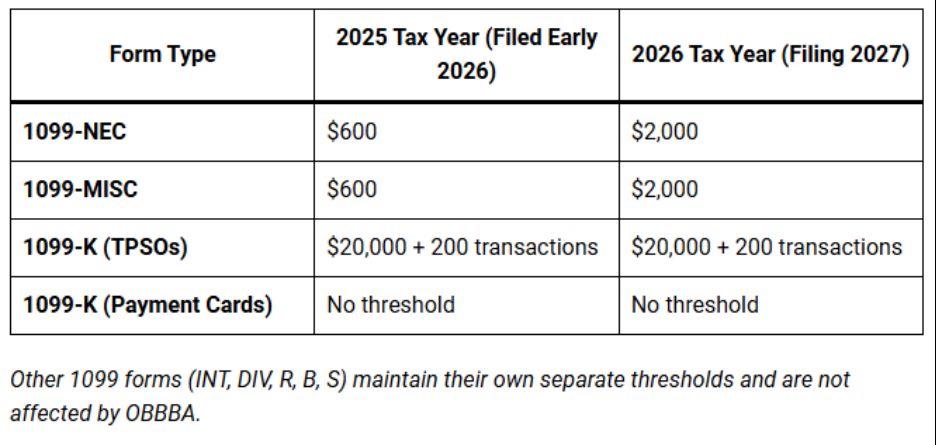
Congress passed the One Big Beautiful Bill Act in July 2025, retroactively restoring the $20,000 and 200-transaction threshold for third-party settlement organizations for 2025 and future tax years. Lawmakers made the change to keep occasional transactions, such as splitting a dinner bill or selling a few used items, from triggering the same reporting that applies to higher-volume, higher-dollar activity. The Treasury Department and the IRS followed up with a final rule in the Federal Register on August 10, 2026, which formalizes how backup withholding aligns with that same threshold. The IRS had proposed this rule back in January, and the final version keeps that approach in place.
The lower threshold that had been scheduled to phase in step by step would have applied to far smaller amounts, pulling in more reporting across platforms such as PayPal, Cash App, Vinted, and Poshmark. Restoring the $20,000 and 200-transaction standard returns the rule to where it stood for close to a decade before that phase-in began.
What Is the 1099-K Reporting Threshold Now?
Under the restored standard, a payment app or marketplace must only send you a Form 1099-K when both conditions apply in a calendar year:
- Your gross payments for goods or services total more than $20,000
- You have more than 200 transactions on that platform
For example, someone who sells a handful of higher-priced items but stays under 200 transactions wouldn’t trigger the form, and someone with frequent, lower-priced sales who stays under $20,000 wouldn’t trigger it either. Per IRS Publication 1099, this threshold covers third-party settlement organizations, meaning apps and marketplaces that manage payments between buyers and sellers, such as ride-share and delivery platforms, resale sites, and payment apps.
No new filing deadline comes with this change; only the reporting threshold itself shifted.
Who Does This Affect?
This threshold touches a wide range of people, including:
- Small business owners who take payment through apps or online marketplaces.
- Individuals who sell goods or services, such as reselling clothing or handmade items, or picking up freelance work.
- Real estate professionals and healthcare providers who rely on online payment processors for client payments.
- Gig workers on ride-share and delivery platforms.
Getting fewer 1099-Ks doesn’t mean less income to report. All income remains taxable whether a form is provided or not. Some states also set their own 1099-K threshold below the federal level, so a form can still show up even when you haven’t crossed the $20,000 and 200-transaction mark. Either way, confirm that your own records, not just the forms a platform sends, reflect all income received during the year.
What About Backup Withholding?
Backup withholding requires a payment platform to hold back a portion of a payment and send it to the IRS, typically because a taxpayer ID was missing or didn’t match IRS records. Under the same final rule, backup withholding follows this same $20,000 and 200-transaction threshold for calendar years beginning after 2024, meaning 2025 and future years. Before this change, the two sets of rules weren’t fully aligned. Now they run on one consistent standard, so a platform that doesn’t have to send you a 1099-K also won’t need to withhold from your payments on that account.
What Should You Do Now?
A few steps worth taking, whether you run a small business or sell on the side:
- Keep your own running record of payments received on every platform you use.
- Confirm that your taxpayer ID information on file with each payment app or marketplace is correct and current, to lower the chance of backup withholding.
- Check whether your state sets a lower 1099-K threshold.
- Talk with an MBE CPAs advisor about how the threshold fits your specific mix of income sources.
How Can MBE CPAs Help You Prepare?
Running a shop, freelancing on the side, or growing a small business means tracking more than any rulebook spells out. When the rules themselves keep shifting, that job gets harder, not easier. You shouldn’t have to keep score alone.
That’s what MBE CPAs is built for. Bring us your platforms, your side income, or your growing business. We’ll work through where this threshold leaves you and get your records in order before filing season. Reach out today.