
Federal tax and benefit rules shifted following the enactment of the One Big Beautiful Bill Act (OBBBA). While conversations surrounding the legislation often focus on broader corporate tax implications, the specific Health Savings Account (HSA) provisions impacting employee benefits and healthcare eligibility are frequently overlooked.
As businesses prepare for the upcoming enrollment cycle and plan for the 2027 tax benefits and tax-planning cycle, individuals should also remain proactive regarding compliance and employee benefits.
What are Health Savings Accounts?
Health Savings Accounts (HSAs) are a type of personal savings account that delivers a triple-tax benefit when used to pay for certain health care costs. Withdrawing from HSAs creates unique reporting considerations, as it is tax-free if used for qualified medical expenses.
Expenses that typically qualify for HSA funds include:
- Deductibles
- Copayments
- Coinsurance
- Preventive care services
Insurance premiums generally are not qualified medical expenses for HSA purposes, although exceptions may apply to certain long-term care premiums.
Health Savings Accounts provide many individual benefits. Here are some points to consider:
- Contributions may be deductible or excluded from federal taxable income
- No expiration date on funds
- HSA funds may generally cover qualified medical expenses for the account holder, spouse, and dependents
- The HSA is individually owned and remains with the employee after a job change
HSAs create a potential bridge between personal financial accounts and employer-sponsored benefits. Learn more about how HSA contributions and withdrawals work.
The HSA Expansion Enacted by OBBBA
Following the enactment of OBBBA, changes were introduced to alter existing plans, create opportunities for new benefits, and adjust tax-related guidelines according to employment status. The three primary HSA expansions include:
- Permanent First-Dollar Telehealth Coverage. The retroactive telehealth safe harbor will now treat plans as High-Deductible Health Plans (HDHPs) without having a deductible for these services. This permanent extension allows digital health and telehealth providers to evaluate and update their services and coverage for HDHP participants. Employer plan sponsors may reinstate free or low-cost coverage for telehealth services for the next plan year.
- Expanded HSA Eligibility for Individual-Market Bronze and Catastrophic Plans. Many of these plans offer certain non-preventive benefits before the deductible is met, so this change introduces a great shift. HSA-qualified marketplace plans may be advantageous as contribution limits, eligibility monitoring, and comparative effectiveness testing will be affected.
- HSA eligibility will not be affected by Direct Primary Care Enrollment. Previously, an individual would lose HSA eligibility under DPC since their care services are covered before the plan’s deductible has been met. Now that an individual remains HSA-eligible, DPC fees of up to $150 are treated as qualified medical expenses and may be paid tax-free. Employers and HSA administrators may need to update their systems to properly identify and substantiate qualifying DPC expenses.
From Wiley P Long, President | HSA for America
How Should Employers Plan for HSA Changes in 2027?
Following the changes from OBBBA, there are many plan terms employers should consider for the 2027 season. Having an employee-focused strategy will help businesses remain proactive amongst the necessary changes. This is a new era of workforce legislation, incorporating ways to assist with employee retention by expanding available benefit opportunities.
Here are the actionable measures that are relevant to employee benefit plans:
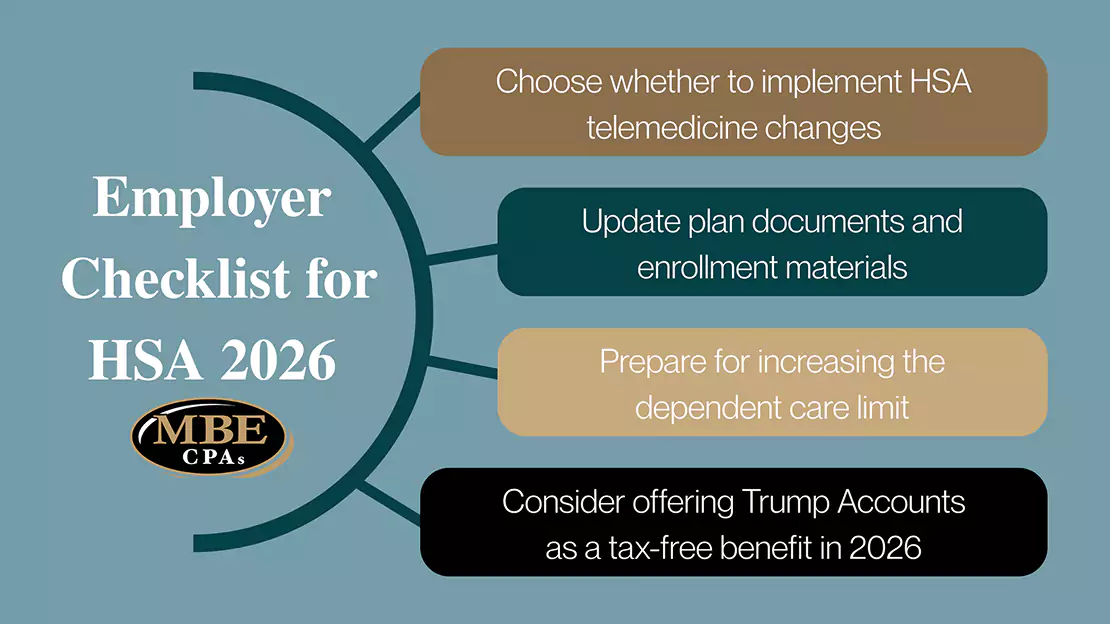
- Choose whether to implement HSA telemedicine changes. The telehealth provision may necessitate adjustments to previous HSA eligibility determinations. Issues could arise regarding deductibles and out-of-pocket expenses already incurred.
- Update plan documents and enrollment materials. Employers should consider consulting with a professional regarding the implementation of the changes to telehealth, bronze plans, and DPC. Payroll and HRIS systems should be reviewed to accommodate expanded HSA eligibility criteria and to help manage compliance with contribution limits.
- Prepare for increasing the dependent care limit. Amend plan documents and modeling testing to analyze potential impacts. Retroactive adjustments may be evaluated for employees who are entitled to additional contributions and potential employer matching contribution adjustments.
As noted, employers must verify that their payroll and benefits administration systems accurately reflect these changes to avoid compliance issues and potential penalties.
Even with the provisions employers should make, it is highly practical to inform employees of their eligibility and updated benefits. By beginning your planning stage now, employers can evaluate the financial impact of these updates and help employees understand the expanded HSA flexibility.
These changes may require updates to plan documents, employee communications, payroll systems, and administrative procedures. It may be beneficial for employers to meet with professionals to help steer through the intersection of federal tax law, healthcare regulations, and employment benefits.
How Should I Plan for My HSA in 2027?
Although these changes took effect in 2026, individuals can also start planning their HSA now for 2027. Here are recommendations from HSA for America:
- Maximize current HSA contributions ($4,500 individual/$9,000 family, plus $1,000 catch-up) to build funds for future DPC memberships for 2027.
- Treat HSA like a long-term retirement account. If possible, pay current expenses out-of-pocket to allow HSA funds to grow tax-free. Some financial advisors view this as one way to potentially build long-term savings, given the HSA’s triple-tax structure.
- Keep receipts of expenses for future HSA reimbursement flexibility. There is no time limit on HSA reimbursements, which creates tax-free withdrawal opportunities in retirement.
- Research DPC options. Since DPC can now be combined with HSA eligibility, search for providers’ pricing and service models.
If you’re considering changing health plans during open enrollment, factor in how the changes might affect your options. Starting research now will help inform your decisions and allow you to use the expanded HSA flexibility when it becomes available.
HSA Tax Strategy Planning with MBE CPAs
For employers, offering a competitive health insurance benefit is an important decision, an issue many employers will revisit during the 2027 benefits-planning cycle. HSA plans are becoming flexible and offering more opportunities for employers.
The risk areas that you should be aware of are as follows:
- Payroll tax compliance for employer HSA contributions.
- ERISA fiduciary responsibility for investment oversight.
- State insurance regulation compliance for DPC arrangements.
- IRS reporting requirements for expanded HSA eligibility.
Taking proactive steps means discussing your specific situation with MBE CPAs to identify the options that may work for your business.
Together, MBE can help you think through the costs of adopting new healthcare plans for your employees.
Our customized tax strategies look like:
- Industry-Specific. We stay current on regulations and incentives relevant to your industry.
- Personalized. Our guidance is focused on your needs, goals, and priorities.
At MBE CPAs, we offer accounting, tax, and advisory services to support your financial decisions.
Conclusion
The One Big Beautiful Bill Act (OBBBA) made the most significant expansion of HSA regulations in over a decade, creating opportunities and challenges for both individuals and employers. These detailed updates involve much more than minor policy revisions.
Given the effects these HSA changes may have on payroll, benefits administration, and taxes, employers should build a relationship with a qualified professional before making their 2027 decisions. With how valuable these new options will be to employees, early communication will be beneficial for the upcoming open enrollment period.
Key takeaway: The expanded HSA flexibility under OBBBA requires employers to begin planning the best way to identify employer cost savings and employee value.