
If you grow corn, soybeans, wheat, or another covered commodity, or you rent out crop ground to someone who does, USDA just opened a window that hasn’t been open since 2002. You have until Aug. 31, 2026, to review and, if you qualify, add base acres to your farm’s Agriculture Risk Coverage (ARC) and Price Loss Coverage (PLC) allocation.
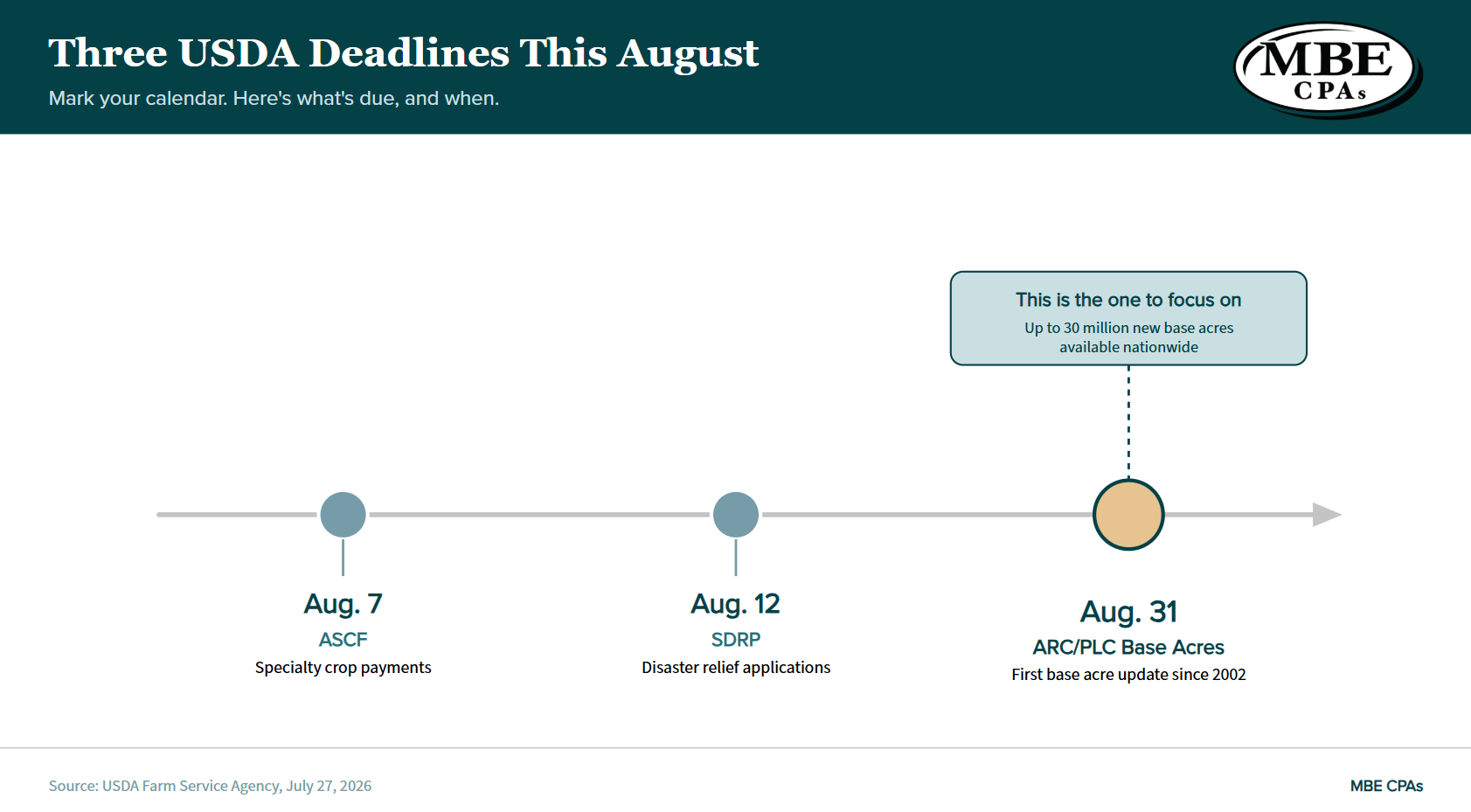
USDA’s July 27 announcement covered two other deadlines worth a quick mention. Specialty crop producers who reported 2025 acreage have until Aug. 7 to file for the Assistance for Specialty Crop Farmers (ASCF) program. Producers with crop losses from 2023 or 2024 disasters have until Aug. 12 to apply for the Supplemental Disaster Relief Program (SDRP). Both work through pre-filled applications from your county FSA office, so they’re worth a quick check if they apply to you. The rest of this post focuses on the Aug. 31 ARC/PLC deadline, since it’s the one most crop farms and landlords haven’t dealt with before.
What Changed?
The Working Families Tax Cuts Act (also known as the One Big Beautiful Bill) directs USDA’s Farm Service Agency to let eligible landowners add base acres for ARC and PLC starting with the 2026 crop year. USDA says up to 30 million new base acres could be added nationwide. This is the first update to base acres since 2002, so most current landowners have never gone through this process before.
A base acre isn’t the same as an acre you’re farming this year. It’s a commodity-specific number FSA assigned to your farm (corn base acres, wheat base acres, soybean base acres, and so on), mostly set decades ago on what was planted back then. Your farm base acres can be higher or lower than what you plant today, and they’ve stayed frozen since 2002 even as farms have grown, changed hands, or shifted what they grow. That’s the gap this window is meant to close.
Base acres are what determines the size of your farm’s ARC/PLC safety-net payments when prices or revenue drop. More base acres generally means a bigger potential payment in a down year. This isn’t retroactive money, and it’s not guaranteed money. It changes what your farm is eligible to receive if ARC or PLC triggers a payment in a future year.
Who Does This Affect?
- Crop farms growing corn, soybeans, wheat, and other covered commodities anywhere in the country
- Landlords who own crop ground and lease it to a farm operator
- Multi-generational and family entities that hold farmland separately from the operating business
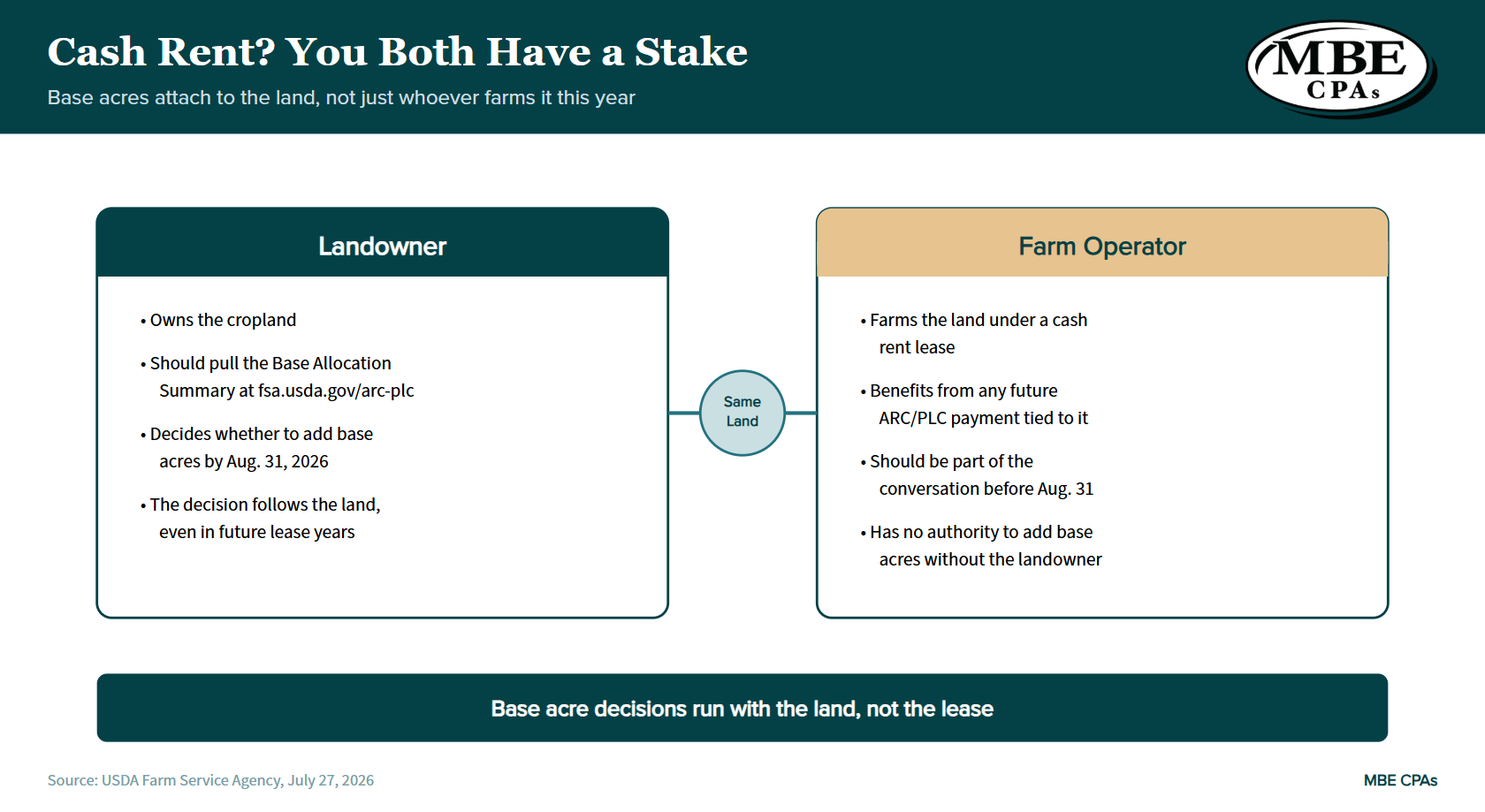
If your operation cash-rents land, both the landowner and the operator have a reason to look at this. Base acre decisions attach to the land, not just to whoever’s farming it this year.
What To Do Before Aug. 31
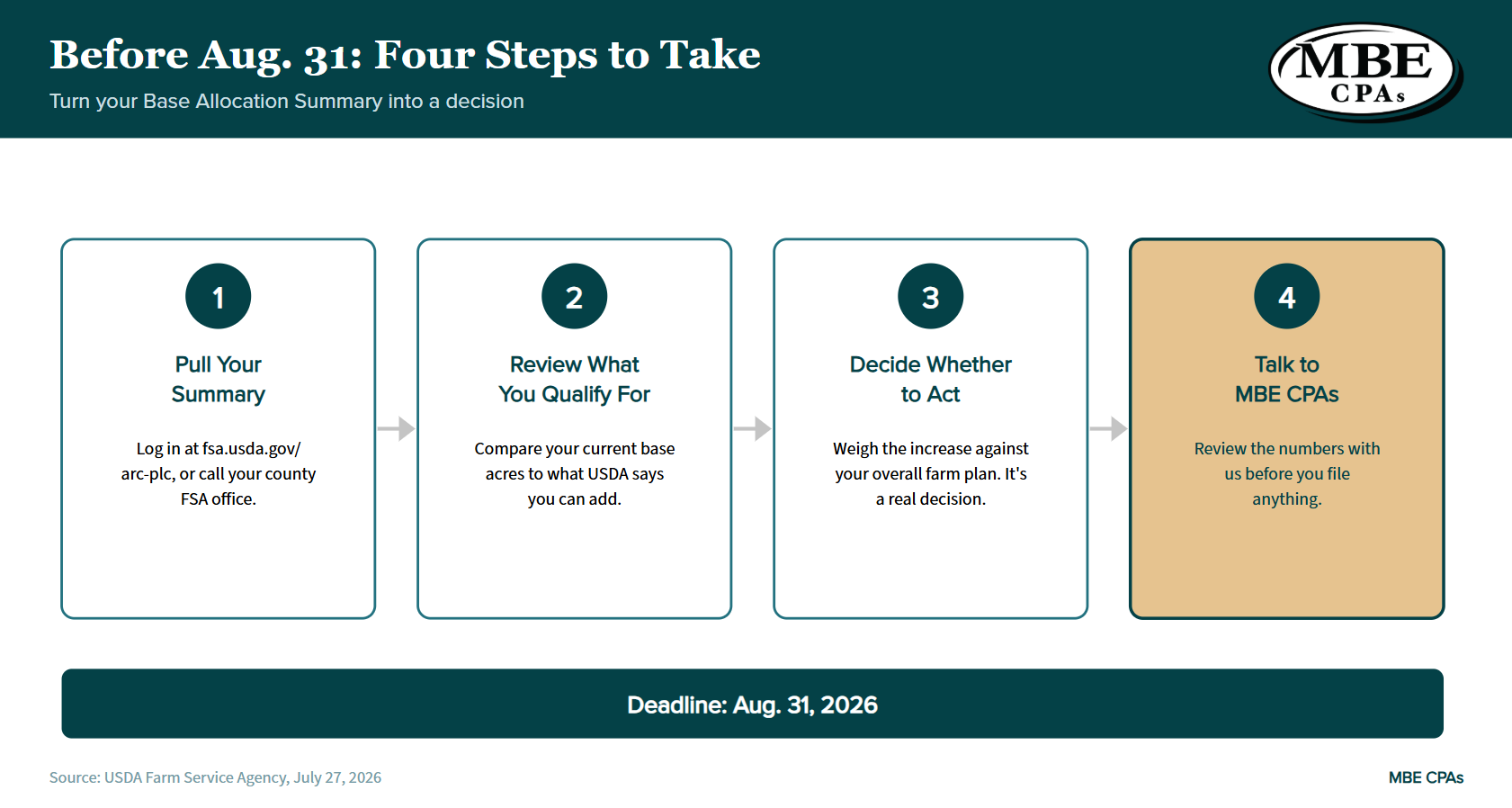
- Pull your Base Allocation Summary at fsa.usda.gov/arc-plc using a Login.gov account, or call your county FSA office and ask them to send it to you.
- Review what USDA says you’re eligible to add. The summary will show your current base acres and any increase you qualify for.
- Decide whether to act. This is a real decision, not paperwork to rubber-stamp. Adding base acres can affect future payment potential, and it’s worth thinking through alongside your overall farm plan before the window closes.
- Talk to us before you file anything. We can help you understand what the numbers mean for your operation and whether now is the right time to make changes.
The Deadline is Real
Aug. 31, 2026, is a hard cutoff. USDA isn’t signaling that this window will reopen soon, and it took 24 years to get here. If you own or lease crop ground, don’t let this pass without at least pulling your Base Allocation Summary and taking a look.
If you have questions about what your Base Allocation Summary means for your farm, reach out to an MBE CPAs advisor before mid-August.