
If you deduct vehicle mileage for business, you’ll want to check your math before you file. The IRS has raised the standard mileage rate in the middle of the tax year, a move it rarely makes. The change affects anyone who drives for work, from real estate agents showing homes to healthcare providers making site visits to small business owners logging miles between job sites.
Here’s what changed, why it happened, and what to do about it.
What Changed with the IRS Mileage Rate?
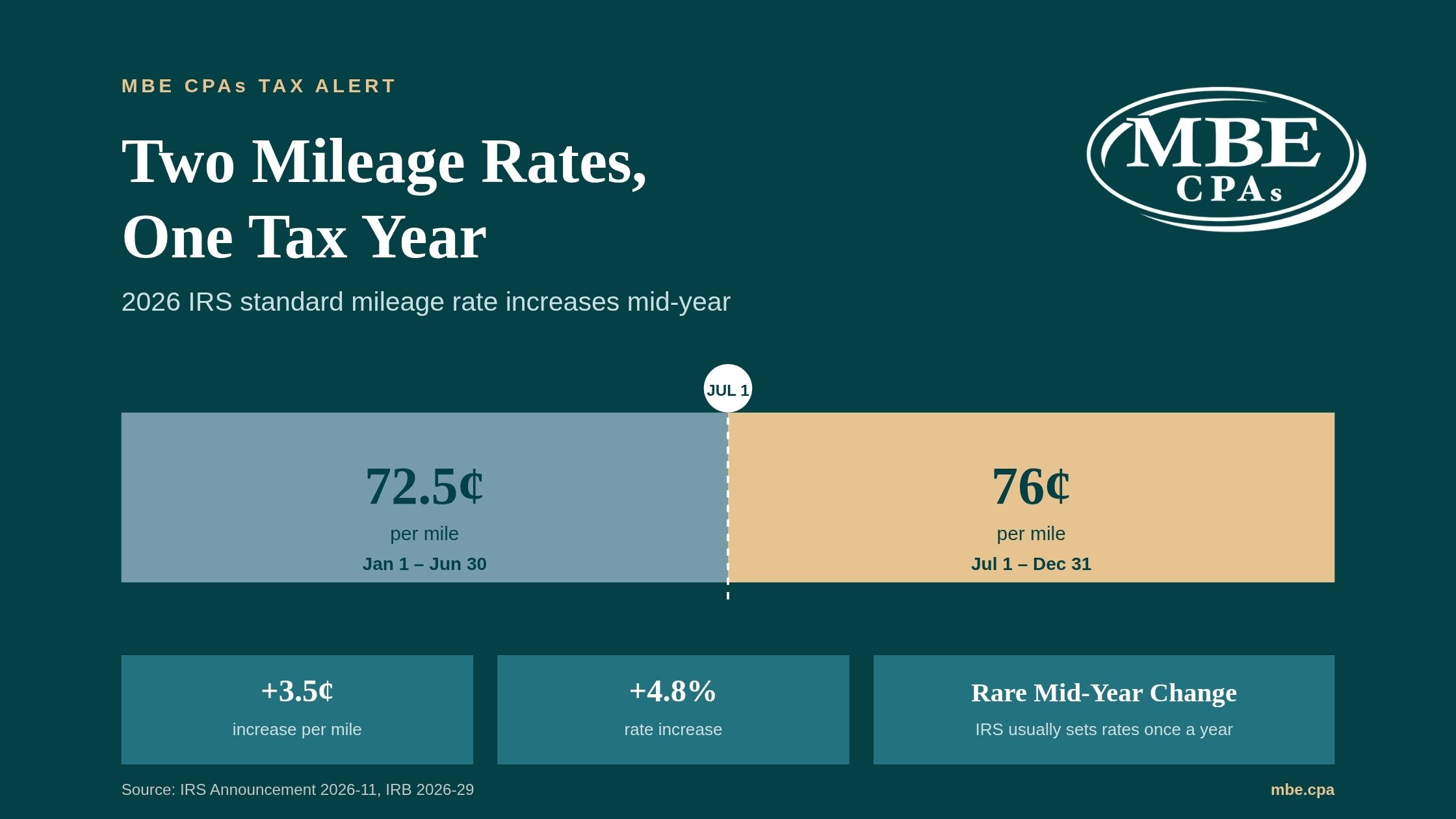
Effective July 1, 2026, the IRS raised the standard business mileage rate from 72.5 cents to 76 cents per mile. The medical and moving mileage rate rose too, from 20.5 cents to 23.5 cents per mile. Both changes come from IRS Announcement 2026-11, published in Internal Revenue Bulletin 2026-29.
A few numbers worth sitting with:
- The business rate rose 3.5 cents per mile, a jump of roughly 4.8%, which is a meaningful bump for anyone logging thousands of business miles a year.
- The medical/moving rate rose 3 cents per mile, about a 15% increase.
- The charitable mileage rate is fixed under § 170(i) of the Internal Revenue Code at 14 cents per mile.
Why Did the IRS Raise the Rate in the Middle of the Year?
According to Announcement 2026-11, the increase responds to recent increases in the price of fuel. The IRS typically sets mileage rates once a year, at the end of December, for the entire following tax year. A mid-year adjustment is uncommon enough that most coverage of the announcement, including reporting from Forbes, Bloomberg Tax, and Littler between July 9 and July 13, 2026, flagged it as a rare move.
The new rate applies no matter what you drive. Gas, diesel, hybrid, and electric vehicles are all covered under the same 76-cent figure. There’s no separate rate for EVs.
Who Does This Change Affect?
Anyone who uses the standard mileage method to deduct vehicle costs, rather than tracking expenses, needs to know about this. That includes:
- Real estate agents and brokers driving between showings, listings, and closings
- Healthcare providers making home or facility visits
- Owners of S-corps, LLCs, and partnerships who log mileage for business travel
- Any self-employed individual or small business claiming a mileage deduction on their return
If your business reimburses employees for mileage, the higher rate applies only when two things are both true: the trip happened on or after July 1, 2026, and the reimbursement is paid to the employee on or after July 1, 2026. If you’re catching up on reimbursements for June travel, that mileage still uses the 72.5-cent rate even if the payment itself goes out in July or later.
How Do I Split My Mileage Log for 2026?
This is the part that’s easy to miss. Because the rate changed mid-year, 2026 is a two-rate tax year, and your mileage log needs to reflect that:
- Miles driven January 1 through June 30, 2026: Deduct at 72.5 cents per mile
- Miles driven July 1 through December 31, 2026: Deduct at 76 cents per mile
If your mileage tracking app or spreadsheet doesn’t already separate business miles by date, now is the time to build in that split. Filing your return with a single blended rate for the full year will produce the wrong deduction.
What Should You Do Now?
A few steps to take before year-end:
- Confirm your mileage tracking method (app, log, or odometer records) captures the July 1 cutover date.
- If your business reimburses mileage, update the reimbursement rate for trips taken on or after July 1, 2026.
- Flag this for anyone on your team who drives regularly for work. The change is easy to miss since it doesn’t align with the calendar year most people expect.
If you’re not sure how this affects your specific situation, especially if you’re weighing the standard mileage rate against deducting vehicle expenses, talk to your MBE CPAs advisor before you file.